
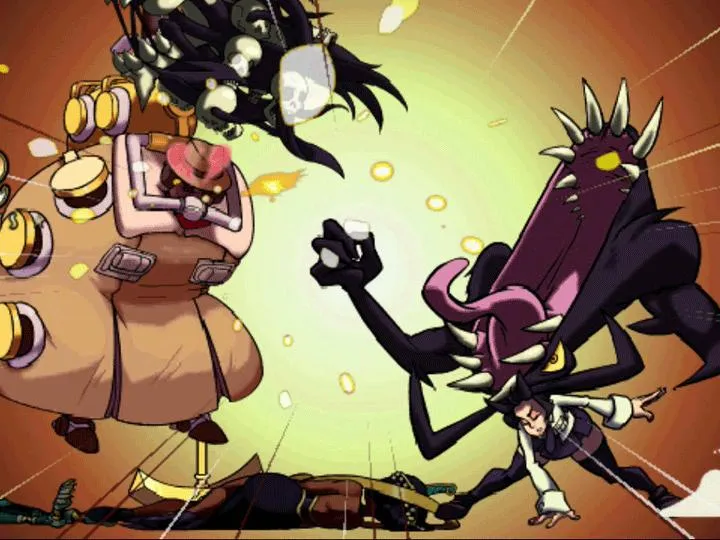
Understand Skullgirls 2nd Encore frame data to make calculated decisions. Learn startup, active, and recovery frames for punishes and offensive control.
Understanding frame data in Skullgirls 2nd Encore is crucial for elevating your gameplay from mashing buttons to making calculated, strategic decisions. Every action your character takes, from a simple jab to a devastating Blockbuster, has a specific number of frames associated with its startup, active, and recovery phases. Mastering this information allows you to identify punishable moves, create safe pressure, and optimize your combos.
What is a Frame?
A "frame" is the smallest unit of time in a fighting game, typically 1/60th of a second (since Skullgirls runs at 60 frames per second). When we talk about a move having "X frames of startup," it means it takes X frames for the attack to become active and capable of hitting your opponent.
Key Frame Data Terms
- Startup Frames: The number of frames from when you input a move until the first active hitbox appears. Faster startup means the move comes out quicker.
- Active Frames: The number of frames during which the attack's hitbox is present and can connect with the opponent. Longer active frames can make a move easier to hit or sustain pressure.
- Recovery Frames: The number of frames after the active frames end until your character can perform another action (move, block, attack, jump). Shorter recovery frames mean you can act again sooner, making a move safer.
- Total Frames: Startup + Active + Recovery. This is the entire duration of the move.
- On Block Advantage (OBA): Also known as "Frame Advantage on Block." This is the most critical frame data point for understanding pressure and safety.
- Positive (+) OBA: You recover before your opponent does after they block your attack. This means you can act again before them, allowing you to continue pressure, mix-up, or even land another hit if they try to retaliate. For example, a move that is
+2 on blockmeans you recover 2 frames before your opponent. - Negative (-) OBA: Your opponent recovers before you do after they block your attack. This means they can act before you, potentially punishing your move. For example, a move that is
-5 on blockmeans your opponent recovers 5 frames before you, giving them a 5-frame window to counter-attack. - Neutral (0) OBA: Both you and your opponent recover at the exact same time. This often leads to a "reset" to neutral or a scramble for initiative.
- Positive (+) OBA: You recover before your opponent does after they block your attack. This means you can act again before them, allowing you to continue pressure, mix-up, or even land another hit if they try to retaliate. For example, a move that is
- On Hit Advantage (OHA): Similar to OBA, but describes the frame advantage after a move successfully hits your opponent. This is crucial for combo extensions and determining follow-up options.
- Invincibility Frames (I-frames): Frames during which your character cannot be hit by attacks. These are common on certain Blockbusters, reversals (like Filia's s.HP or Parasoul's s.HP with Tear), and during the startup of some supers.
Accessing Frame Data
While Skullgirls 2nd Encore doesn't have an in-game frame data display for every move, there are excellent community resources available:
- Dustloop Wiki: The definitive source for Skullgirls frame data. Navigate to your character's page (e.g., "Filia Frame Data") to find detailed tables for every normal, special, and Blockbuster.
- Training Mode: While not displaying raw numbers, the Training Mode's "Dummy Settings" and "Display" options can help you test frame advantage.
- Set the Dummy to "Block All" or "Block First Hit."
- Record a simple attack string.
- Set the Dummy to "Reversal Action" and choose a fast attack (e.g., a 3-frame jab like Filia's L.Punch or a 5-frame reversal like Cerebella's Excellebella).
- Observe if your recorded string leaves you safe or punishable. If the dummy's reversal hits you, your string was likely negative enough for them to retaliate.
Practical Application: Using Frame Data in Matches
1. Identifying Punishable Moves
If an opponent repeatedly uses a move that is highly negative on block (e.g., -10 on block), you can punish it with a fast startup attack or even a full combo. For example, if Valentine's Scalpel Upper (qcf+HP) is blocked, it's often very negative, leaving her vulnerable to a quick counter-attack from most characters.
2. Creating Safe Pressure
Aim to use moves that are +0 or positive on block to continue your offense. For instance, Peacock's L.Bang! (qcf+LP) is often positive on block from a distance, allowing her to throw out another projectile or dash in for a mix-up. Even moves that are slightly negative (e.g., -1 or -2) can be "safe" if your opponent doesn't have a fast enough attack to punish you, or if you space it correctly.
3. Understanding Character Match-ups
Some characters have naturally faster normals or specials. Knowing that Squigly's s.LP is 5 frames of startup, while Painwheel's s.LP is 7 frames, helps you understand who has the advantage in close-range scramble situations.
4. Optimizing Combos and Resets
On-hit advantage dictates how much time you have to link into your next attack in a combo. Moves with high OHA allow for more flexible combo routes or easier resets. For example, a move that leaves your opponent in +30 hitstun gives you ample time to follow up.
5. Defensive Options
Knowing the startup of your opponent's attacks helps you choose the correct defensive option. If they are using a slow overhead, you might have time to react and block high. If they are using a fast low, you need to anticipate it. Understanding the invincibility frames on your own reversals (like a Dragon Punch-style move) helps you know when to use them to escape pressure.
By consistently referring to frame data and testing concepts in Training Mode, you'll develop a deeper understanding of Skullgirls 2nd Encore's intricate combat system, leading to more intentional and effective gameplay.
100% Human-Written. AI Fact-Checked. Community Verified. Learn how AntMag verifies content