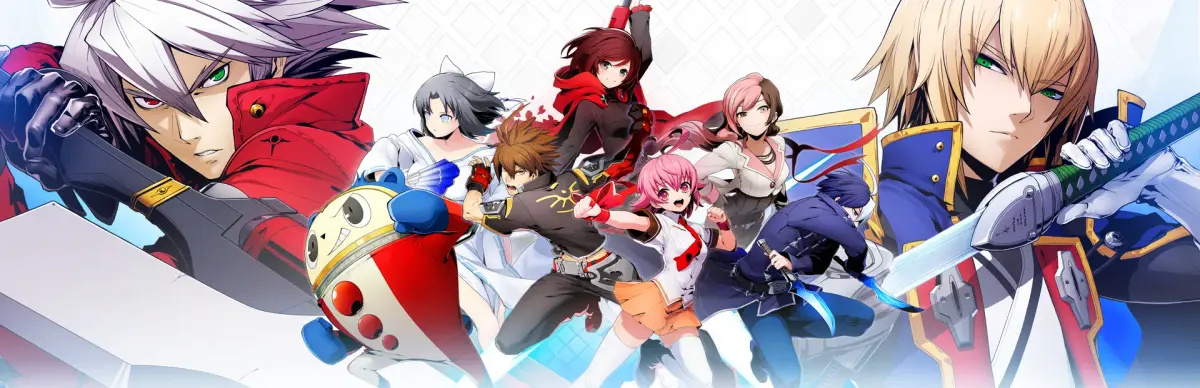
Learn how to decide whether to approach, maintain distance, or retreat in BlazBee: Cross Tag Battle by understanding priority and spacing tools.
The core principle for deciding whether to approach, maintain distance, or retreat in BlazBee: Cross Tag Battle is understanding who has priority in neutral. Priority is determined by which character's approach (movement plus attack) reaches the opponent faster from a given distance. Ideally, this approach should also be reasonably safe, often achieved using a character's spacing tool or poke.
Your goal in neutral should be to enter a distance where YOU have priority. From this range, your approach will be faster than your opponent's, allowing you to potentially counter their attempts to approach you. Once at your optimal range, you have several options: you can attack, maintain the distance to threaten an attack, or retreat. Retreating is generally less useful unless you need time to recover resources like the drive gauge or wish to exit a perceived danger zone to play passively.
If you know your opponent will respect your threat and block, you can sometimes skip the neutral-to-offense transition. Instead of using your spacing tool, you can dash further than its range to quickly access fast mix-ups, typically possible only at close range, to break the opponent's guard. This is an abuse of your priority and is risky, as dashing close to the enemy leaves you completely open. It can lead to losing your pressure opportunity if the opponent jumps back to neutral, or even a heavy punish if they predict your dash and attack directly. Therefore, this tactic should be used sparingly.
Generally, every character has an "illegal/abusive approach tool" that forces their priority. These are unsafe attacks on whiff (missing) or on block (hitting the opponent's guard), which allow for quick, long-reaching approaches to catch opponents off guard. However, they have long recovery times, making them punishable. Examples include Ragna's Hell's Fang (214A), Mai's Himeyuri (236A), or Tsubaki's sweep (3C).
The degree of unsafety for these attacks varies based on the opponent's character, the distance, and your ability to cancel the attack (Rapid Cancel). You cannot Rapid Cancel a whiffed unsafe attack even with 50% meter.
To deal with or punish these types of approaches, you must recognize the circumstances under which an opponent tends to use them (e.g., after you jump, or after they use a projectile) and the distance from which they execute them. Then, identify the weakness, which might simply be blocking the attack. For instance, to punish Mai's Himeyuri (236A), a special attack likely with long recovery, you can predict its use based on your distance and jump. If timed correctly, you can make the attack whiff. Any descending air attack can then punish Mai, as she is left open after whiffing 236A.
The character with priority (fastest, reasonably safe approaches) in most distances generally wins neutral. Taokaka (due to movement speed) and Izanami (due to instant long-reaching projectiles) are examples of characters who typically win neutral. When a character has priority at a certain distance, they can choose to approach or not. The opponent, however, must play based on the advantageous character's options. They can either attempt to evade/re-position to escape the advantageous distance, provided there is enough space to do so safely and in time, or stand their ground to guard or counter. Standing ground requires reacting or predicting the opponent's approach and may involve using anti-airs or Dragon Punches (DPs), which are very unsafe in neutral. This is generally the worst-case scenario for the player without priority.
Countering an opponent's action typically takes longer than evading. Reacting takes time, whereas predicting an action allows for less reaction time. To counter effectively, you might need to predict the opponent's actions. If your goal is simply to evade their approach, you may have more time to react, which is safer but less rewarding than predicting and countering.
The type of character you are using significantly impacts your decisions. Faster characters, like Naoto, may have quicker tools allowing for reaction-based counters (after seeing the opponent's approach). Slower characters, like Hakumen or Kagura, might need to predict the opponent's approach and commit to an action to counter.
Your gameplay style—passive/aggressive, offensive/defensive, or approaching/evading—should adapt to both your character and your opponent's character. Generally, attack speed and range vary inversely: faster attacks have shorter reaches, while slower attacks with longer startup times potentially have greater reaches. Characters with faster, more flexible tools that have shorter range tend to win when closer to the opponent; these are known as "Rushdown" characters (like Makoto, who aims to approach). Characters with slower, longer-reaching tools tend to win neutral when farther from the opponent; these are known as "Zoner" characters (like v-13, who aims to maintain distance and prevent approaches).
100% Human-Written. AI Fact-Checked. Community Verified. Learn how AntMag verifies content