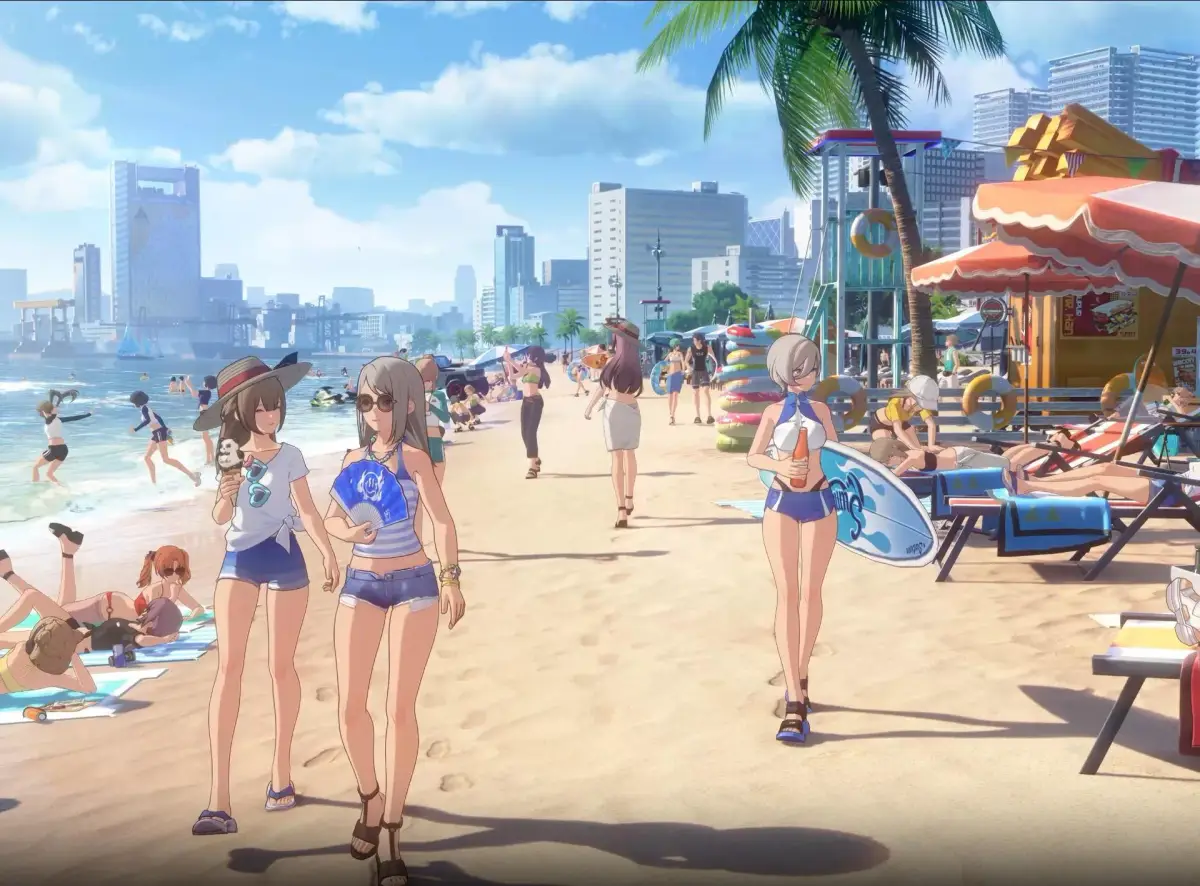
New to Ananta? Don't sweat those graphics settings! This guide breaks down how to optimize your game for the best performance without sacrificing too much visual flair. Let's get you playing smoothly!
Hey there! So, you've just booted up Ananta and you're staring at a wall of graphics options. Don't worry, it's not as scary as it looks! Think of it like tuning up your ride – we want it to look good, but more importantly, we want it to run smoothly. Let's walk through these settings together.
Understanding the Basics
Most of these settings control how detailed the world looks. Higher settings mean prettier graphics, but they also demand more from your computer. Lower settings mean less eye candy, but your game will likely run much faster and smoother, especially during intense moments like a big fight or a chase sequence.
Resolution
This is basically how many pixels your game is displayed in. Higher resolution (like 1920x1080 or 4K) looks sharper, but it's a big performance hog. If you're struggling for frames, try lowering this first. You might be surprised how much of a difference it makes!
Texture Quality
This affects how detailed the surfaces of objects look – think the bark on a tree or the metal on a weapon. Lowering this can save a good chunk of VRAM (that's your graphics card's memory). If your game stutters when looking at detailed environments, try turning this down from 'Ultra' or 'High' to 'Medium' or even 'Low'.
Shadow Quality
Realistic shadows are awesome, but they can be super demanding. If you notice a big dip in performance in areas with lots of complex lighting, dropping shadow quality from 'High' to 'Medium' or 'Low' can often give you a significant boost. You might lose some of the super-fine shadow details, but the smoother gameplay is usually worth it.
Anti-Aliasing (AA)
This smooths out those jagged edges you sometimes see on objects. It can make things look much cleaner, but it can also impact performance. If you're not too bothered by slightly rougher edges, turning AA off or using a less demanding setting (like FXAA instead of MSAA) can free up resources.
Post-Processing Effects
This is a catch-all for things like motion blur, depth of field, bloom, and ambient occlusion. These can add a lot of cinematic flair, but they can also be performance killers. Experiment with turning these off one by one to see which ones give you the biggest performance gain for the least visual downgrade. Motion blur, in particular, is often a personal preference – some love it, some hate it, and turning it off usually helps performance.
Putting It All Together
My advice? Start with a preset that sounds about right for your system (like 'Medium' or 'High'). Then, jump into the game. If it feels smooth, great! If not, start tweaking. Lowering shadows and anti-aliasing are usually good first steps. If you're still having trouble, consider texture quality or resolution. It's all about finding that sweet spot where the game looks good enough for you and runs well enough that you're not getting frustrated.
Don't be afraid to experiment! Every system is a little different, so what works perfectly for one person might need a few tweaks for another. Happy gaming!
100% Human-Written. AI Fact-Checked. Community Verified. Learn how AntMag verifies content